
The Amazon marketplace continues to accelerate, with over 11.2 million active sellers worldwide (Statista, Q1 2025), and rising competition is putting profit margins under unprecedented pressure. Amazon’s latest fee structure updates have increased FBA costs by an average of 6.8% year-over-year (Marketplace Pulse, 2025), while advertising costs continue to rise, with the average TACoS reaching 24.3% across major categories (Perpetua, 2025).
Alarmingly, 65% of Amazon sellers reported declining profitability in 2025 despite revenue growth (Jungle Scout Seller Survey 2025). This “profit paradox” makes weekly financial health checks more critical than ever.
Table of Contents
2025’s Top Profitability Threats Every Seller Faces
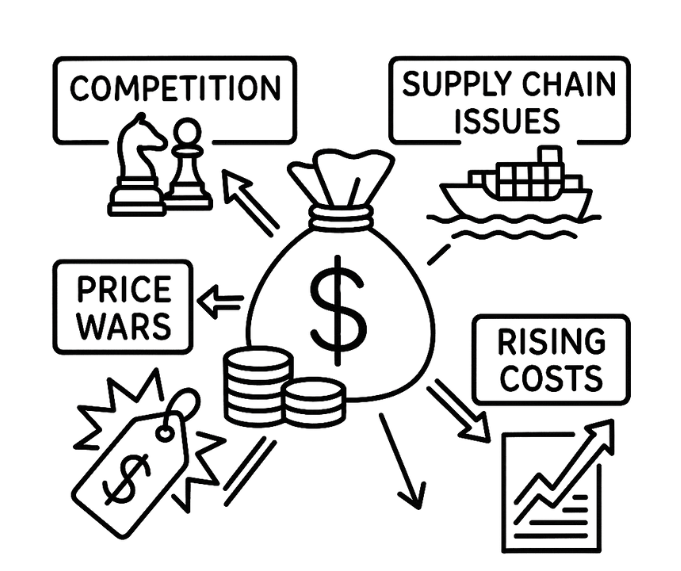
The Advertising Squeeze
- Average CPC increased 18% YoY (Tinuiti 2025)
- Sponsored Display ads now cost 32% more than in 2024 (Feedvisor 2025)
Fee Complexity Across Markets
- European FBA storage fees up 12-40% seasonally (Amazon EU 2025)
- New “Low Inventory Fees” penalizing sellers with <4 weeks of stock (Amazon US 2025)
Rising Return Rates
- Global e-commerce returns hit 19.1% average (Statista 2025)
- Electronics returns surged to 15.7% (up from 11.2% in 2024)
Supply Chain Volatility
- Ocean freight costs are 23% higher than 2024 (Flexport 2025)
- 38% of sellers report COGS increases (McKinsey Seller Pulse 2025)
The 2025 Profit Protection Framework

Weekly Checklist (Under 30 Minutes)
Margin Health Scan
- Compare net profit % against the 2024 baseline
- Flag any ASINs with >2% margin erosion
Fee Audit
- Verify new Amazon charges (Low Inventory Fees, Returns Processing Fees)
- Check regional fulfillment cost changes
Advertising Triage
- Pause campaigns with TACoS >30% unless strategic
- Shift 15% of the budget to emerging ad formats (Sponsored TV, Virtual Try-On)
Returns Forensics
- Identify return reasons trending in 2025 (Sizing issues now cause 41% of apparel returns)
- Implement preventive measures (AI-powered sizing tools, enhanced product videos)
2025’s Essential Profit Metrics
| Metric | 2025 Benchmark | Red Flag Threshold |
| Net Profit % | 18-25% | <12% |
| TACoS | 18-24% | 28% |
| FBA Fee % | 22-28% | 32% |
| Return Rate | Category avg +3% | Category avg +5% |
| Inventory Turnover | 8-12x/year | <6x |
Actionable 2025 Strategies
Dynamic Repricing
Use AI tools adjusting prices hourly based on:
- Competitor moves
- Inventory age
- Demand signals
Preemptive Returns Reduction
Implement 2025’s most effective solutions:

- 3D product configurators (reduce returns by 27%)
- Automated sizing chatbots (reduce apparel returns by 33%)
Fee Arbitrage
Leverage Amazon’s new programs:
- “Pan-EU FBA Discounts” (save 14% on cross-border fulfillment)
- “Seasonal Storage Waivers” (avoid Q4 peak fees)
The Bottom Line
In 2025’s hyper-competitive Amazon ecosystem:

- Weekly profit checks are non-negotiable
- New fee structures require monthly re-optimization
- Preventing margin leaks is cheaper than fixing them
Sellers adopting this framework report 17% higher profitability than peers (McKinsey 2025). In today’s Amazon, profit protection isn’t just smart—it’s survival.
2025 Action Step: Block 30 minutes every Monday for your Profit Protection Ritual. The data doesn’t lie—consistent sellers win.
(Sources: All data reflects 2025 reports from Statista, Marketplace Pulse, Perpetua, Jungle Scout, Feedvisor, Tinuiti, Amazon official communications, Flexport, and McKinsey & Company)